
In the metal fabrication industry, the quality and lifespan of press brake tooling depend heavily on the materials used during manufacturing. Different tooling applications require different combinations of hardness, wear resistance, toughness, corrosion resistance, and heat-treatment performance.
At IVILA, we manufacture high-quality press brake tooling and stamping dies using carefully selected tool steels and alloy materials. Understanding the characteristics of common tooling metals can help manufacturers choose the right material and improve productivity, accuracy, and tool life.
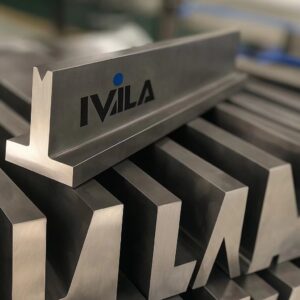
Why Material Selection Matters for Press Brake Tooling
The performance of a press brake punch or die is determined not only by machining accuracy but also by the steel grade used during production.
A suitable material can provide:
- Longer service life
- Better wear resistance
- Improved bending accuracy
- Reduced maintenance costs
- Greater resistance to cracking and deformation
For heavy-duty press brake tooling, selecting the correct steel is one of the most important factors in ensuring consistent bending performance.
Medium Carbon Structural Steels
45 Steel
45 steel is one of the most commonly used medium-carbon steels in machinery manufacturing.
Key Features
- Good overall mechanical properties
- Moderate strength and toughness
- Suitable for quenching and tempering
- Economical and widely available
Applications
- Shafts
- Gears
- Turbine components
- Pistons
- Machine parts
For welded components, preheating before welding and stress-relief annealing after welding are recommended to prevent cracking and improve structural stability.
Q235 Low Carbon Steel
Q235 offers excellent plasticity, weldability, and cold-forming capability.
Key Features
- Easy welding
- Good ductility
- Low cost
- Excellent cold bending performance
Applications
- Structural frames
- Supports
- Machine bases
- Bridges
- Construction components
40Cr Alloy Steel
40Cr is one of the most widely used alloy steels in industrial manufacturing.
Key Features
- Good hardenability
- Excellent wear resistance
- High fatigue strength after heat treatment
- Suitable for induction hardening
Applications
- Gears
- Transmission shafts
- Spindles
- Worm gears
- Automotive components
Because of its tendency to crack during welding, IVILA recommends preheating to 100–150°C before welding and performing stress-relief annealing after welding.
Stainless Steel Materials
304 Stainless Steel (0Cr18Ni9)
304 stainless steel is the world’s most widely used stainless steel.
Advantages
- Excellent corrosion resistance
- Good formability
- Hygienic surface finish
- High-temperature resistance
Applications
- Food processing equipment
- Chemical equipment
- Medical devices
- Precision fabrication
Cold Work Tool Steels
Cold work tool steels are commonly used for manufacturing press brake tooling, stamping dies, punches, and wear-resistant components.
Cr12 Tool Steel
Equivalent to D3 tool steel.
Features
- Extremely high wear resistance
- High hardness
- Poor impact toughness
- Suitable for low-impact applications
Applications
- Blanking dies
- Punches
- Drawing dies
- Cold extrusion dies
- Thread rolling dies
Cr12MoV Tool Steel
An upgraded version of Cr12.
Advantages
- Better toughness
- Improved hardenability
- Reduced carbide segregation
- Enhanced wear resistance
Applications
- Deep drawing dies
- Punching dies
- Trimming dies
- Cold cutting tools
Many traditional press brake tooling manufacturers use Cr12MoV for medium-duty tooling because of its balance between cost and performance.
Premium Tool Steels
SKD11 Tool Steel
Equivalent to D2 tool steel.
Benefits
- High wear resistance
- Excellent toughness
- Stable heat-treatment performance
- Suitable for precision tooling
Applications
- Precision stamping dies
- Thread rolling dies
- Punches
- Forming tools
At IVILA, SKD11 is frequently selected for high-precision press brake tooling that requires long service life and dimensional stability.
DC53 Tool Steel
DC53 is considered an upgraded version of SKD11.
Advantages
- Higher hardness
- Twice the toughness of SKD11
- Reduced cracking risk
- Excellent machinability
Applications
- Precision stamping dies
- Cold forging dies
- Deep drawing tools
For demanding bending operations, DC53 provides superior performance compared to conventional tool steels.
SKH-9 High-Speed Steel
Equivalent to M2 high-speed steel.
Features
- Exceptional hardness
- Outstanding wear resistance
- Excellent red hardness
Applications
- Drills
- Reamers
- Cutting tools
- Precision punches
High-End Tooling Materials
ASP-23 Powder Metallurgy Steel
Manufactured using advanced powder metallurgy technology.
Benefits
- Uniform carbide distribution
- Excellent wear resistance
- High toughness
- Outstanding dimensional stability
Applications
- Long-life punches
- Precision dies
- Cutting tools
This material is often used in premium-grade press brake tooling where long production runs require maximum durability.
Plastic Mold Steels
P20 Tool Steel
P20 is one of the most popular plastic mold steels.
Characteristics
- Pre-hardened condition
- Easy machining
- Good polishability
- Cost-effective
Applications
- Plastic molds
- Resin molds
- Prototype tooling
H13 Tool Steel
H13 is a widely used hot-work tool steel.
Advantages
- Excellent thermal fatigue resistance
- High toughness
- Good heat resistance
- Long service life
Applications
- Hot forging dies
- Aluminum extrusion dies
- Hot stamping molds
Many heavy-duty press brake punches are manufactured from H13 because of its ability to withstand repeated loading.
Choosing the Right Material for Press Brake Tooling
Different materials are suitable for different production requirements:
| Requirement | Recommended Material |
|---|---|
| Low Cost | 45 Steel |
| General Tooling | Cr12MoV |
| Precision Bending | SKD11 |
| Heavy-Duty Applications | DC53 |
| Long Tool Life | ASP-23 |
| High Temperature Resistance | H13 |
| Corrosion Resistance | 304 Stainless Steel |
Why IVILA Uses Premium Tool Steels
At IVILA, we understand that material selection directly affects tooling performance.
Our manufacturing process includes:
- High-quality alloy steel sourcing
- CNC precision machining
- Controlled heat treatment
- Strict hardness testing
- Precision grinding
- Final quality inspection
For welded tooling assemblies, we follow strict procedures including:
- Preheating before welding
- Controlled welding processes
- Stress-relief annealing after welding
- Final dimensional verification
These processes ensure excellent durability and accuracy for every press brake tooling product.
Conclusion
The success of any tooling project begins with selecting the correct material. From economical carbon steels to advanced powder metallurgy tool steels, each material offers unique advantages for specific manufacturing applications.
For manufacturers seeking reliable, durable, and high-precision press brake tooling, material selection is just as important as machining quality.
With years of experience in tooling production, IVILA combines premium steel materials, advanced heat treatment, and precision manufacturing to deliver tooling solutions that improve productivity, reduce downtime, and extend tool life across a wide range of metal fabrication industries.

