
Sheet metal bending is one of the most common processes in metal fabrication. It is used to turn flat metal sheets into different shapes and angles for applications such as machinery, automotive parts, electrical cabinets, construction equipment, and industrial components.
But how does sheet metal bending work? What bending methods are commonly used, and how do you choose the right machine and tooling?
In this guide, we will explain the basic principle of bending, common bending methods, equipment, tooling, and the key factors that affect bending quality.
What Is the Principle of Sheet Metal Bending?
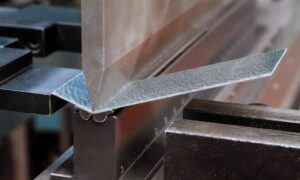
The basic principle of sheet metal bending is quite simple. A machine applies external force to a metal sheet through a punch and die. Under pressure, the sheet first undergoes elastic deformation and then plastic deformation.
When the force is removed, the material may slightly return toward its original shape. This is known as springback. Therefore, the bending angle and machine parameters need to be properly adjusted to achieve the required final angle.
The bending result is affected by several factors, including material type, sheet thickness, bending radius, die opening, bending force, and machine accuracy.
Common Sheet Metal Bending Methods
Different bending methods are used depending on the shape, material, and production requirements of the workpiece.
V-Bending
V-bending is one of the most common sheet metal bending methods. The sheet is placed over a V-shaped lower die, and the upper punch presses the material into the die.
By changing the punch, die opening, and bending depth, manufacturers can produce different bending angles, including 90-degree bends and sharper angles.
V-bending is widely used because it is flexible, efficient, and suitable for many types of sheet metal.
U-Bending
U-bending uses a U-shaped die to form the sheet into a U-shaped or curved profile.
This method is often used when the workpiece requires a larger radius or a special curved shape. Compared with standard V-bending, U-bending requires specific tooling designed for the desired profile.
Roll Bending
Roll bending uses several rollers to gradually bend a sheet into a curved shape.
As the sheet passes through the rollers, pressure is continuously applied to the material. This makes roll bending suitable for producing cylinders, arcs, tanks, pipes, and other large curved components.
Unlike traditional press brake bending, roll bending is especially useful when a long and continuous curve is required.
Coining and Embossing Bending
Coining is a high-pressure bending process in which the material is pressed strongly between the punch and die.
The process can reduce springback and improve bending accuracy. It is useful for applications that require highly consistent bending angles and precise forming results.
What Equipment Is Used for Sheet Metal Bending?
The bending process usually involves more than just a bending machine. Cutting equipment and forming equipment may also be used before or during production.
Press Brake
The press brake is the most common machine used for sheet metal bending.
Depending on the machine design, press brakes can be hydraulic, electric, pneumatic, or manually operated. CNC press brakes are especially popular in modern fabrication because they can automatically control bending position, angle, speed, and other parameters.
A suitable press brake can significantly improve production efficiency and bending accuracy.
Laser Cutting Machine
A laser cutting machine is often used before bending to cut the sheet into the required shape.
High-precision laser cutting can produce complex contours, holes, and slots with accurate dimensions. Accurate cutting is important because even small dimensional errors can affect the final bending result.
For this reason, laser cutting and press brake bending are often used together in modern sheet metal fabrication.
Cold Forming Equipment
Cold forming equipment uses pressure and specialized dies to shape metal without heating it.
It can be used to manufacture various profiles, special sections, and structural components. This type of equipment is particularly suitable for standardized products and large-volume production.
Common Sheet Metal Bending Tooling
The tooling used during bending has a direct impact on the final product. Choosing the correct punch and die can help improve bending accuracy, surface quality, and tool life.
Upper Punch
The upper punch is installed on the ram of the press brake. During bending, it moves downward and presses the sheet into the lower die.
Different punch shapes can be used for different applications. Common options include standard punches, acute punches, radius punches, and special-shaped punches.
Lower Die
The lower die is installed on the press brake table and supports the sheet during bending.
V-shaped dies are widely used for standard bending applications. The die opening should be selected according to the material thickness, bending radius, bending angle, and required bending force.
Choosing the wrong die opening can lead to problems such as excessive bending force, surface marks, inaccurate angles, or even material damage.
Roll Bending Tool
Roll bending tools consist of rollers that gradually apply pressure to the sheet.
Different roller configurations can be used to create different curved shapes. They are commonly used for large-radius bending and cylindrical components.
Embossing Tool
Embossing tools create a groove, impression, or specific profile on the sheet.
The formed area can then be used as a reference for subsequent bending. This method can help improve repeatability when producing complex or high-precision components.
What Factors Affect Bending Quality?
Getting a good bending result requires more than choosing the right machine. Several factors need to be considered during the entire process.
Material Selection
Material type and thickness have a major influence on bending performance.
Different materials have different strength, ductility, and springback characteristics. Therefore, the bending parameters should be adjusted according to the material being processed.
For example, stainless steel generally requires more bending force than mild steel of the same thickness.
Tooling Selection
The punch and die should match the material and bending requirements.
Important factors include punch shape, die opening, bending radius, tooling material, and tooling hardness.
The correct tooling can reduce surface marks, improve bending accuracy, and extend tooling life.
Bending Force and Speed
Bending force needs to be sufficient to deform the material without overloading the machine or tooling.
Bending speed also affects production efficiency and forming quality. For some materials and complex shapes, a slower and more controlled bending process may provide better results.
Bending Angle and Radius
The required bending angle and inside radius should be considered before selecting the tooling.
A small bending radius may increase the risk of cracking, especially when working with hard or less ductile materials. A larger radius can reduce material stress but may require different tooling and machine settings.
Springback Control
Springback is one of the most common challenges in sheet metal bending.
After the pressure is released, the material tends to partially return to its original shape. To compensate for springback, operators may need to slightly overbend the workpiece or adjust the CNC bending parameters.
How to Improve Sheet Metal Bending Quality
To achieve consistent bending results, manufacturers should focus on several key areas.
First, choose the right material and understand its mechanical properties. Second, select suitable punch and die tooling based on sheet thickness, bending angle, and radius. Third, set the correct bending force, speed, and position.
It is also important to keep the tooling clean and properly maintained. Worn or damaged tooling can cause inconsistent angles, surface marks, and dimensional problems.
Finally, inspect the workpiece after bending. Checking the bending angle, dimensions, surface condition, and overall shape can help identify problems early and maintain consistent production quality.
Final Thoughts
Sheet metal bending may look simple, but achieving accurate and consistent results requires the right combination of material, machine, tooling, and process parameters.
V-bending, U-bending, roll bending, and coining are suitable for different applications. At the same time, choosing the right press brake punch and die is essential for controlling bending angle, radius, surface quality, and springback.
With proper equipment, suitable tooling, and optimized bending parameters, manufacturers can improve both production efficiency and final product quality.

