
Are you still struggling with accuracy problems caused by incorrect press brake tooling drawings?
In modern sheet metal fabrication workshops, operators often spend hours adjusting tooling, correcting bending angles, and troubleshooting production problems. Behind many bending failures is not the machine itself, but an inaccurate or incomplete tooling design.
At IVILA, we believe that a professional press brake tooling drawing is more than a technical document—it is the production roadmap that determines bending accuracy, tooling life, and manufacturing efficiency.
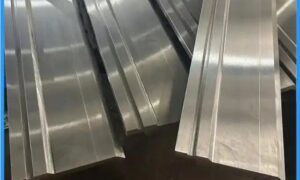
Precision Errors Can Create Huge Production Problems
Every sheet metal manufacturer understands the frustration caused by inaccurate bending results.
A customer may require a bending tolerance within ±0.03 mm, but outdated tooling, incorrect dimensions, or poor drawing standards can make consistent production almost impossible.
Common problems caused by inaccurate press brake tooling drawings include:
- Incorrect bending angles
- Uneven forming pressure
- Excessive tooling wear
- Surface damage on finished parts
- Increased scrap and rework costs
Even a small dimensional error in the tooling design can create significant problems during mass production.
At IVILA, our engineering team focuses on every critical detail, including:
- Tool geometry
- Punch and die dimensions
- Radius accuracy
- Material selection
- Heat treatment requirements
- Machine compatibility
A precise drawing is the foundation of reliable bending performance.
A Professional Tooling Drawing Is the Blueprint of Production
A high-quality press brake tooling drawing should provide the same level of accuracy as an engineering construction blueprint.
Every important parameter must be clearly defined:
- Overall tooling dimensions
- Working height
- Bending angle
- Radius specifications
- Tolerance requirements
- Material requirements
- Heat treatment standards
When developing customized tooling, IVILA uses advanced CAD design systems combined with precision manufacturing technology.
Our engineers carefully analyze customer requirements and optimize tooling structures before production begins.
This process helps ensure:
- Stable bending angles
- Reduced machine adjustment time
- Improved repeatability
- Higher production efficiency
A well-designed drawing eliminates problems before they appear on the production floor.
Material Selection Determines Tooling Performance
The quality of a press brake tooling solution depends heavily on material selection.
Different applications require different tooling materials and hardness levels.
For example:
- Standard carbon steel applications require balanced hardness and toughness.
- Stainless steel bending requires stronger wear resistance.
- Heavy plate forming requires high-strength tooling capable of handling extreme pressure.
IVILA uses premium alloy steel combined with advanced heat treatment processes to improve:
- Wear resistance
- Dimensional stability
- Fatigue strength
- Service life
Proper material selection ensures that tooling maintains accuracy even under long-term production conditions.
Customized Press Brake Tooling for Different Applications
Every factory has unique production requirements.
Standard tooling may work for common applications, but special parts often require customized solutions.
IVILA provides customized press brake tooling based on:
- Material type
- Sheet thickness
- Bending radius
- Product structure
- Machine model
- Production volume
Whether producing:
- Stainless steel cabinets
- Elevator panels
- Electrical enclosures
- Automotive components
- Aerospace parts
IVILA engineers create tooling designs that match each specific application.
A customized drawing means fewer adjustments, less waste, and faster production.
Advanced Design Creates Better Bending Results
Modern manufacturing requires more than traditional tooling design.
IVILA combines:
- 3D modeling technology
- Precision machining
- Advanced measurement equipment
- Engineering experience
to optimize every tooling design.
Before production, engineers evaluate:
- Stress distribution
- Material deformation
- Contact points
- Tool strength
- Bending accuracy
This prevents potential failures

