
Why Press Brake Tooling Stress Analysis Matters
In modern sheet metal fabrication, press brake tooling plays an essential role in achieving accurate and consistent bending results. During the bending process, the tooling system must withstand continuous pressure, bending force, and repeated mechanical loads. If the stress distribution inside the tooling is not properly controlled, problems such as deformation, premature wear, and inaccurate bending angles may occur.
Therefore, understanding press brake tooling stress analysis is important for improving tooling performance, extending service life, and reducing production costs. Through proper material selection, structural optimization, and manufacturing improvements, press brake tooling can maintain stable performance even under demanding production conditions.
How Stress Is Generated During Press Brake Bending
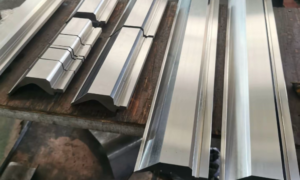
A press brake works by using the upper punch and lower die to apply force to the sheet metal. When the upper tooling moves downward, the bending force is transferred through the tooling and creates internal stress within the punch and die.
The stress level depends on several factors, including material thickness, bending angle, tooling shape, die opening, and the required bending force. During heavy bending operations, the contact area between the tooling and workpiece experiences extremely high pressure. If the force is concentrated in a small area, stress concentration may occur, causing cracks, surface damage, or permanent deformation.
At the same time, the sheet metal creates resistance during plastic deformation. This resistance is transferred back to the tooling, creating additional bending stress. A well-designed press brake tooling system can distribute these forces evenly and improve overall bending stability.
Main Factors Affecting Press Brake Tooling Performance
Tooling Material Selection
The material of press brake tooling directly determines its strength, hardness, and wear resistance. Since the tooling works under repeated high-pressure conditions, the material must have excellent mechanical properties to prevent deformation and damage.
High-quality alloy steel, tool steel, and specially treated carbon steel are commonly used for press brake tooling manufacturing. Proper material selection allows the tooling to maintain its shape during long-term production while reducing replacement frequency.
For high-volume manufacturing, choosing stronger and more durable tooling materials can significantly improve production efficiency and reduce maintenance costs.
Tooling Structure and Stress Distribution
The design of press brake tooling has a direct influence on stress distribution. Improper geometry can create concentrated stress points, which may reduce tooling life and affect bending accuracy.
During tooling design, engineers usually optimize the punch radius, die structure, and contact surfaces to achieve better force distribution. A reasonable radius transition helps reduce stress concentration, while a suitable V-opening design allows the bending force to spread more evenly.
A properly designed tooling structure not only improves durability but also ensures more stable bending results for different sheet metal materials.
Manufacturing Accuracy and Heat Treatment
The manufacturing process is another important factor affecting press brake tooling performance. High-precision machining ensures accurate dimensions, better alignment between upper and lower tooling, and consistent bending quality.
Heat treatment is also essential because it improves the hardness and wear resistance of the tooling surface. However, excessive hardness may reduce toughness, while insufficient hardness may accelerate wear. Therefore, a balanced heat treatment process is necessary to achieve both strength and durability.
Modern CNC grinding technology and advanced heat treatment methods allow manufacturers to produce press brake tooling with higher accuracy and longer service life.
Optimization Methods for Press Brake Tooling
Improving press brake tooling performance requires optimization throughout the entire manufacturing process. The first step is analyzing the stress distribution during operation and identifying areas with excessive loading.
By adjusting the tooling structure, manufacturers can reduce stress concentration and improve overall strength. For example, optimizing corner transitions, improving supporting areas, and selecting suitable dimensions can help the tooling withstand higher bending forces.
Material improvement is another effective method. Using high-quality steel combined with proper heat treatment can increase resistance against wear, impact, and repeated loading.
In addition, precision machining technology plays an important role in tooling optimization. Accurate grinding and finishing processes ensure that the tooling dimensions remain consistent, which improves bending precision and product quality.
Common Press Brake Tooling Problems and Solutions
During daily production, press brake tooling may experience several common problems.
Tool wear is one of the most frequent issues. Continuous contact between the tooling and metal sheets gradually affects the working surface, reducing bending accuracy. Regular inspection, proper lubrication, and selecting wear-resistant materials can effectively slow down tooling wear.
Another common problem is insufficient bending accuracy. This may happen due to incorrect tooling selection, poor alignment, or uneven force distribution. Checking tooling installation, maintaining machine accuracy, and selecting the correct punch and die combination can improve bending consistency.
Tool deformation may occur when the applied bending force exceeds the tooling capacity. In this situation, manufacturers should select stronger tooling materials, optimize the tooling design, and avoid excessive loading conditions.
The Future Development of Press Brake Tooling Optimization
With the development of intelligent manufacturing technology, press brake tooling design is becoming more advanced. Digital simulation and computer-aided engineering tools allow manufacturers to analyze stress conditions before actual production.
Through simulation technology, engineers can predict possible deformation areas, optimize tooling structures, and improve product reliability before manufacturing begins.
In the future, the combination of advanced materials, precision machining, and intelligent production systems will further improve the performance of press brake tooling and provide more efficient solutions for sheet metal processing industries.
Conclusion
Press brake tooling stress analysis and optimization are important factors in improving bending quality, extending tooling life, and increasing manufacturing efficiency.
By selecting suitable materials, optimizing structural design, improving machining accuracy, and applying proper maintenance methods, manufacturers can achieve more reliable and precise bending performance.
As sheet metal fabrication continues to demand higher accuracy and efficiency, advanced press brake tooling technology will play an increasingly important role in modern manufacturing.

