
In sheet metal fabrication workshops, the loud sound of press brakes can be heard throughout the day. However, behind the busy production environment, many operators still face the same problems: uneven bending marks, inconsistent angles, and dimensional errors of 0.5 mm or more.
These issues often come from one key factor — press brake tooling manufacturing and selection.
With years of experience in precision tooling production, professional manufacturers understand that a high-quality press brake die is not just a simple bending component. It is an important factor that directly affects production efficiency, product quality, and manufacturing costs.
This article explores how proper press brake tooling manufacturing can improve production performance and help manufacturers reduce unnecessary expenses.
Common Challenges in Press Brake Tooling
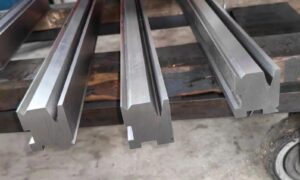
Many sheet metal manufacturers experience problems such as short tooling life, unstable accuracy, and frequent replacement costs.
For example, some automotive component manufacturers have experienced hundreds of rejected parts every month because inaccurate tooling radius caused inconsistent bending results. In many cases, traditional tooling also creates problems such as surface marks and deformation when bending thicker steel sheets.
The main reasons behind these issues are usually related to:
- Improper tooling material selection
- Insufficient heat treatment processes
- Incorrect V-opening design
- Low manufacturing precision
A professional press brake tooling manufacturing process must consider all these factors to ensure stable performance during long-term operation.
Tooling Material Determines Service Life
The material used for press brake tooling has a direct impact on durability and bending accuracy.
High-quality tooling steel with proper heat treatment can provide excellent hardness, toughness, and wear resistance. Many advanced manufacturers use special alloy steels combined with vacuum heat treatment and deep cooling processes to improve tooling performance.
A properly treated tooling surface can maintain stable hardness during repeated bending operations, reducing problems such as edge wear, cracking, and deformation.
Compared with ordinary tooling, premium press brake dies can maintain better dimensional accuracy after thousands of bending cycles, helping manufacturers reduce downtime and replacement costs.
Structural Design Improves Bending Accuracy
Tooling structure is another important factor that affects bending quality.
Different bending applications require different tooling designs. For example, large-radius bending requires more precise control of the punch and die geometry to achieve consistent results.
Advanced tooling manufacturers optimize the contact surface, bending radius, and clearance between upper and lower dies according to different material thicknesses.
By designing proper deformation allowance and improving tooling matching accuracy, problems such as springback and inconsistent bending angles can be effectively reduced.
A well-designed press brake tooling system allows operators to achieve higher precision without excessive machine adjustments.
No-Mark Press Brake Tooling for Surface Protection
For industries that require high surface quality, such as stainless steel equipment and food machinery, traditional tooling may leave visible bending marks.
To solve this problem, modern manufacturers have developed no-mark tooling solutions using special protective materials and composite structures.
By adding flexible material layers to the tooling working surface, bending pressure can be distributed more evenly. This reduces surface damage while maintaining bending accuracy.
For manufacturers producing polished stainless steel parts, no-mark tooling can reduce additional polishing processes, save labor costs, and improve overall production efficiency.
Modular Tooling Systems Improve Production Efficiency
With the increasing demand for customized and small-batch production, flexible tooling systems have become more important.
Modular press brake tooling allows manufacturers to quickly change different V-openings and adapt to various sheet thicknesses.
Instead of replacing the entire lower die, operators can adjust specific tooling components according to production requirements. This greatly reduces setup time and improves machine utilization.
For factories producing multiple product models, modular tooling systems provide a more efficient and cost-effective solution.
Real Production Cases Show Tooling Value
In actual manufacturing projects, the performance of press brake tooling can directly influence final product quality.
For example, when producing large battery box components for new energy applications, manufacturers often require strict control of bending straightness and dimensional accuracy.
By using optimized stepped V-dies combined with accurate positioning systems, advanced tooling solutions can achieve higher bending precision and reduce adjustment time during production.
This shows that professional press brake tooling manufacturing is not only about producing a tool. It is about providing a complete bending solution that improves the entire manufacturing process.
Quality Control Ensures Long-Term Performance
A reliable tooling manufacturer should focus not only on production but also on quality inspection and service.
Modern tooling factories use precision measuring equipment to check important parameters such as:
- Tooling dimensions
- Parallelism accuracy
- Surface quality
- Wear condition
Regular inspection and tooling maintenance help identify potential problems before they affect production.
Some manufacturers also provide tooling management solutions that monitor wear conditions and help customers determine the optimal replacement time, reducing unexpected production interruptions.
Choosing the Right Press Brake Tooling Partner
Standing in front of a busy press brake machine, experienced operators know that the quality of tooling directly affects daily production results.
A high-quality press brake die can improve product consistency, reduce scrap rates, increase machine efficiency, and lower long-term manufacturing costs.
Choosing professional press brake tooling manufacturing is not simply an equipment purchase decision. It is an investment in production stability and future profitability.
The right tooling solution does more than complete bending operations — it becomes a powerful tool for improving manufacturing competitiveness.

