
Sheet metal bending is one of the most critical operations in modern manufacturing. Whether you’re producing electrical cabinets, automotive components, elevator parts, or custom metal fabrications, achieving crack-free bends is essential for product quality and long service life.
However, cracking during bending remains one of the most common challenges in fabrication shops. Fortunately, most bending cracks can be prevented by selecting the right press brake tooling, optimizing machine parameters, and following proper processing techniques.
In this guide, we’ll explain the five most common causes of bending cracks and provide practical solutions to improve your production efficiency.
1. Material Selection Matters
Not all metals behave the same during bending.
Materials such as stainless steel, high-carbon steel, and hardened alloys have high strength but lower ductility. When the bending radius is too small, the outer surface experiences excessive tensile stress, which can easily lead to cracking.
Another important factor is the rolling direction of the sheet. Metal plates develop a grain structure during rolling. Bending perpendicular to the grain significantly increases the risk of cracks.
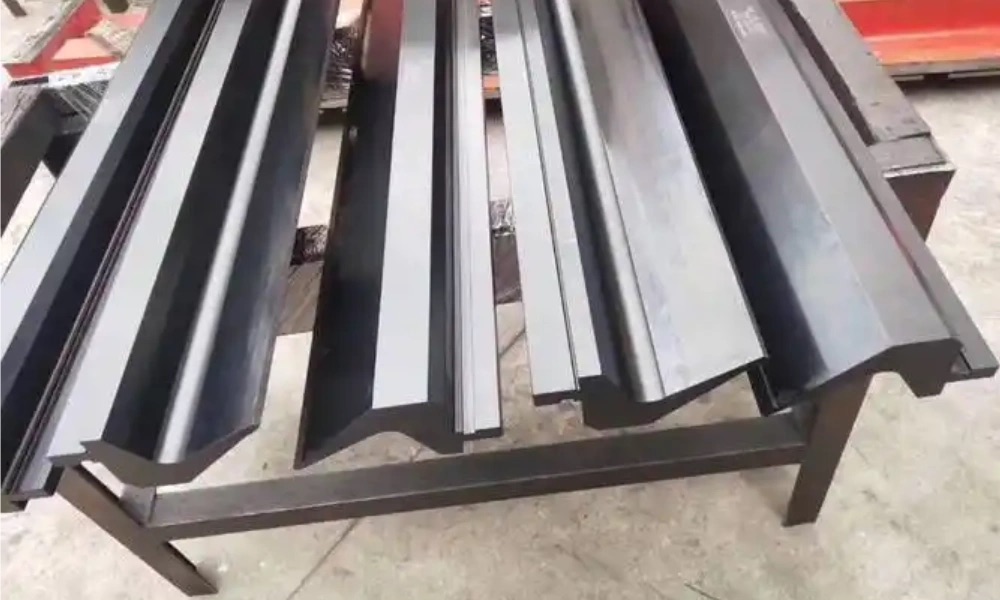
Best Practices
- Choose materials with good ductility whenever possible.
- Increase the inside bending radius for high-strength materials.
- Align the bending line approximately 45° to the rolling direction whenever possible.
- For difficult materials, perform multi-step bending instead of making a single sharp bend.
2. Proper Press Brake Tooling Selection
Selecting the correct press brake tooling is one of the most effective ways to prevent cracking.
Using a V-die opening that is too small concentrates excessive force on the bend area. Likewise, using an inside radius that is too tight stretches the outer fibers beyond the material’s limit.
General recommendations include:
- V-opening: approximately 5–8 times the material thickness.
- Inside radius:
- Mild steel: at least 1–1.5× material thickness.
- Stainless steel: approximately 2× material thickness.
Applying pressure gradually instead of using full tonnage immediately also helps reduce stress concentration.
3. Pay Attention to Material Preparation
Small defects often become the starting point for cracks.
Common issues include:
- Burrs on sheet edges
- Scratches
- Surface damage
- Improper sheet positioning
Even tiny edge defects can propagate into visible cracks during bending.
Recommendations
- Remove burrs before bending.
- Inspect sheet edges carefully.
- Position workpieces accurately to ensure balanced loading.
- Avoid forcing misaligned parts into the tooling.
Good preparation significantly improves bending quality.
4. Maintain Your Press Brake Tooling
Even premium press brake tooling will wear over time.
Rounded punch tips, worn V-dies, rough tool surfaces, or misalignment between upper and lower tooling all increase localized stress and lead to cracking.
Regular maintenance should include:
- Checking punch and die wear.
- Polishing damaged tool surfaces.
- Verifying punch-to-die alignment.
- Replacing excessively worn tooling before production quality declines.
High-quality tooling not only reduces cracking but also extends tool life and improves dimensional consistency.
5. Special Processing for Stainless Steel and Aluminum
Different materials require different bending strategies.
Stainless Steel
Because stainless steel has higher strength and work-hardening characteristics, it benefits from:
- Larger bending radii
- High-quality polished tooling
- Proper lubrication to reduce friction
- Controlled bending speed
Aluminum
Aluminum alloys are softer but more sensitive to cracking in certain tempers.
For some grades:
- Preheating before bending may improve ductility.
- Avoid excessive bending speed.
- Use smooth tooling surfaces to prevent surface damage.
Material-specific processing always produces better bending results.
Why High-Quality Press Brake Tooling Makes the Difference
While operators often focus on machine settings, tooling quality is equally important.
Precision-engineered press brake tooling provides:
- Consistent bending angles
- Lower material stress
- Better surface finish
- Longer service life
- Reduced production scrap
- Improved repeatability
Investing in premium tooling is often far less expensive than dealing with rejected parts and production downtime.
Why Choose IVILA Press Brake Tooling?
As a professional manufacturer of sheet metal fabrication equipment and tooling, IVILA provides reliable press brake tooling designed for high precision and long service life.
Our tooling is manufactured using premium alloy steels and advanced heat treatment processes to ensure excellent wear resistance, strength, and dimensional accuracy.
In addition, IVILA pays special attention to welded components during production:
- Welded parts are preheated before welding to minimize thermal stress.
- Stress-relief annealing is performed after welding to eliminate residual stress and improve structural stability.
- Every component undergoes strict quality inspection before assembly.
These manufacturing practices help ensure greater durability, stable performance, and consistent bending accuracy for demanding industrial applications.
Conclusion
Most bending cracks are preventable with the right combination of material selection, proper machine settings, and high-quality press brake tooling.
By understanding how material properties, tooling geometry, processing parameters, and maintenance affect bending quality, manufacturers can significantly reduce defects and improve production efficiency.
Whether you’re processing mild steel, stainless steel, or aluminum, investing in reliable press brake tooling and proven manufacturing practices is the key to producing high-quality sheet metal components.

