
How Press Brake Tooling Affects Workpiece Quality in Metal Fabrication
In modern sheet metal fabrication, press brake tooling plays a critical role in determining the final quality of bent components. As industries such as automotive, electronics, machinery, and construction continue to demand higher precision and consistency, the requirements for press brake dies are becoming increasingly strict.
The quality of a finished workpiece is not only determined by the bending machine itself but also closely related to tooling design, tooling material, processing parameters, equipment maintenance, and operator experience.
A properly designed and manufactured press brake tooling system can improve bending accuracy, reduce defects, extend tool life, and increase production efficiency.
This article explains the relationship between press brake tooling and workpiece quality, common challenges, solutions, and future development trends.
1. Press Brake Tooling Design Directly Affects Workpiece Accuracy
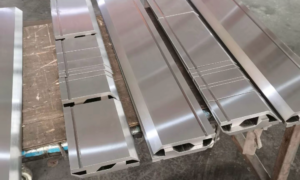
The design of press brake tooling has a direct influence on the geometry, dimensions, and surface quality of bent parts.
During the bending process, the upper punch and lower die work together to apply force and create the required angle and shape. If the tooling design is unsuitable, various quality problems may occur, including:
Workpiece deformation
Incorrect bending angles
Surface damage
Cracks
Dimensional deviations
Several tooling factors affect bending quality, such as:
Tooling angle accuracy
Punch and die radius
V-opening size
Die clearance
Tool alignment
For example, if the V-opening of the lower die is not suitable for the material thickness, excessive bending force may be required, causing deformation or surface marks on the workpiece.
Similarly, an incorrect bending radius can create stress concentration, increasing the risk of cracks, especially when processing high-strength materials.
Therefore, selecting and designing the correct press brake tooling according to the workpiece structure and material characteristics is the first step in achieving stable bending quality.
2. Press Brake Tooling Material Selection Influences Service Life and Product Quality
The material of press brake tooling is another important factor affecting bending performance.
High-quality tooling materials should have:
High hardness
Excellent wear resistance
High strength
Good toughness
Strong deformation resistance
During continuous production, press brake dies are exposed to repeated high pressure. If the tooling material is not strong enough, the punch or die may gradually wear, causing:
Reduced bending accuracy
Uneven bending angles
Poor repeatability
Shorter tooling life
Common tooling materials include alloy steels designed for high-pressure forming applications.
At the same time, the workpiece material also affects bending results.
Different metals have different forming characteristics. For example:
Hard materials may require higher bending force and have a greater risk of cracking.
Softer materials may be easier to form but may experience surface deformation or marking.
Before production, manufacturers should consider the mechanical properties of both the tooling material and workpiece material to select the most suitable bending solution.
3. Optimizing Press Brake Parameters Improves Workpiece Quality
Even with high-quality press brake tooling, incorrect production settings can reduce the final product quality.
During bending operations, several parameters must be carefully controlled, including:
Bending force
Bending speed
Material positioning
Bending sequence
Tool selection
If the bending pressure is too high, the workpiece may experience excessive deformation.
If the pressure is too low, the required bending angle may not be achieved.
Bending speed also affects product quality. Excessive speed may cause:
Surface scratches
Material cracking
Poor forming stability
Optimizing processing parameters allows the press brake tooling and machine system to work together efficiently.
For complex sheet metal parts, choosing the correct bending sequence is also important because improper sequencing may cause interference, distortion, or inaccurate dimensions.
4. Regular Press Brake Tooling Maintenance Ensures Stable Production
The condition of press brake tooling directly affects long-term production quality.
During daily operation, tooling surfaces may experience:
Wear
Impact damage
Surface scratches
Deformation
Without regular inspection and maintenance, these problems can gradually reduce bending accuracy.
Effective maintenance practices include:
Checking punch and die wear regularly
Cleaning tooling surfaces
Lubricating moving components when necessary
Replacing damaged tooling parts
Checking machine alignment
Proper maintenance helps:
Extend tooling service life
Reduce production downtime
Maintain consistent bending accuracy
Lower manufacturing costs
A well-maintained press brake tooling system can provide stable performance even under high-volume production conditions.
5. Quality Inspection Technology Improves Press Brake Production Control
Quality control and inspection technology are essential parts of modern bending production.
Advanced inspection equipment can help manufacturers identify problems quickly and improve product consistency.
Common inspection methods include:
Coordinate measuring machines (CMM)
Laser measurement systems
Dimensional inspection tools
Non-destructive testing equipment
For example, a coordinate measuring machine can accurately measure:
Bending angles
Part dimensions
Hole positions
Geometric tolerances
Non-destructive testing methods can detect internal defects without damaging the workpiece.
By combining precision inspection with advanced press brake tooling, manufacturers can achieve higher production accuracy and reduce defective products.
6. Operator Skills Affect Press Brake Tooling Performance
Although modern press brakes are becoming more automated, operator experience still plays an important role in maintaining workpiece quality.
A skilled operator should understand:
Press brake operation principles
Tool selection methods
Material characteristics
Bending parameter adjustment
Common production problems
Incorrect operation may lead to:
Wrong tooling selection
Improper machine settings
Tool damage
Workpiece defects
Regular technical training helps operators improve production efficiency, reduce errors, and use press brake tooling more effectively.
Experienced operators can quickly identify problems and make adjustments before large-scale production losses occur.
7. Future Development Trends of Press Brake Tooling
With the development of intelligent manufacturing, press brake tooling technology is also moving toward higher precision and automation.
Future trends include:
Intelligent Press Brake Tooling Systems
The combination of artificial intelligence, sensors, and data analysis will allow manufacturers to monitor bending processes in real time.
Smart systems can help:
Automatically adjust bending parameters
Predict tooling wear
Improve production stability
Reduce human errors
Automated Manufacturing
Automation technology will further improve production efficiency through:
Automatic tool changing systems
Robotic loading and unloading
Digital production management
Advanced Tool Manufacturing Technology
New manufacturing technologies, including 3D printing and advanced machining methods, may provide new possibilities for tooling production.
These technologies can help manufacturers:
Shorten development cycles
Produce customized tooling faster
Improve manufacturing flexibility
Press Brake Tooling Is Essential for High-Quality Bending
The relationship between press brake tooling and workpiece quality is extremely close.
Tooling design, material selection, production parameters, maintenance, inspection methods, and operator skills all influence the final bending results.
By selecting suitable press brake tooling, optimizing bending processes, maintaining equipment properly, and adopting advanced manufacturing technologies, manufacturers can achieve:
Higher bending accuracy
Better product consistency
Longer tooling service life
Lower production costs
As the metal fabrication industry continues to develop, press brake tooling will become more intelligent, automated, and precise, providing stronger support for efficient and high-quality manufacturing.

