
Precision Press Brake Tooling Manufacturing: Materials, Heat Treatment, and Grinding Process
In the sheet metal fabrication industry, bending is one of the most important manufacturing processes. As the demand for higher accuracy and production efficiency continues to increase, the quality of press brake tooling has become a key factor affecting final product performance.
A high-quality press brake tool directly influences bending accuracy, production stability, and tool service life. Therefore, selecting reliable tooling and using advanced manufacturing processes are essential for producing precision sheet metal components.
This article explains the current situation of press brake tooling, the key factors affecting tooling quality, advanced CNC grinding technology, and common tooling standards.
1. Current Situation of Press Brake Tooling
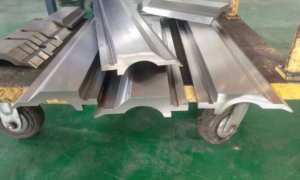
With the rapid development of the sheet metal industry, press brake tooling technology has improved significantly. However, there are still several challenges in the market.
First, the quality of domestic press brake tooling manufacturers varies greatly. Some tooling products have unstable performance, insufficient precision, and shorter service life compared with high-end imported tooling.
Second, imported press brake tooling usually offers better quality and consistency, but it also comes with higher costs and longer delivery times.
Third, when customers require custom or non-standard press brake tooling, communication with manufacturers is often inefficient, which increases development time.
In addition, the industry still lacks a unified tooling standard. Different manufacturers produce different tooling dimensions, making interchangeability difficult. This limits customer choices and increases dependence on specific suppliers.
A standardized press brake tooling system would allow users to easily replace or combine tools from different manufacturers, improving flexibility and reducing operating costs.
2. Key Factors Affecting Press Brake Tooling Quality
The quality of press brake tooling mainly depends on three important factors:
2.1 Press Brake Tooling Material Selection
Material selection is one of the most important factors determining tooling performance and service life.
High-quality press brake tooling usually uses 42CrMo alloy steel, which provides excellent mechanical properties compared with many other materials.
The advantages of 42CrMo include:
High strength and toughness
Excellent hardenability
Small deformation during heat treatment
Good high-temperature strength
Strong resistance to wear and fatigue
Some low-cost tooling manufacturers may use materials such as T7A or T8A. Although these materials can achieve certain surface hardness after heat treatment, their hardened layer is usually shallow.
The internal structure remains relatively soft, which can cause:
Tool deformation
Reduced bending accuracy
Shorter service life
Poor surface quality
Compared with low-cost materials, professional press brake tooling materials provide better wear resistance, corrosion resistance, and polishing performance.
Material quality directly affects the appearance, precision, and durability of the final tooling product.
2.2 Press Brake Tooling Heat Treatment Process
Heat treatment is a critical step in improving the hardness and durability of press brake tooling.
A high-quality press brake tool usually requires a hardness of approximately 47±2 HRC, meaning that the hardness across the tooling surface should remain between 45 and 49 HRC.
The hardened layer depth should generally reach more than 10 mm on one side.
The basic heat treatment process includes:
Rough machining of the tooling blank
Heating in a furnace to approximately 880°C
Oil quenching after reaching uniform temperature
Cooling and deformation inspection
Cold straightening
Tempering
Hardness testing
After these processes, the tooling blank obtains the required mechanical properties.
Several details are especially important during heat treatment.
Controlled Heating and Cooling Process
Because press brake tooling has an irregular geometric shape, uneven heating or cooling may cause unpredictable deformation.
To reduce deformation, professional manufacturers usually use suspended heating and suspended oil quenching methods.
During this process, lifting rings are welded to the tooling surface so that the tool can remain suspended during heating and cooling.
However, very heavy tooling may create stress on the lifting ring at high temperatures, which limits the maximum manufacturing length for some producers.
Improper heat treatment can significantly reduce tooling strength and shorten service life.
Cold Straightening After Quenching
After quenching, each tooling piece should be inspected for deformation.
If deformation exceeds the allowed range, cold straightening is required.
Some manufacturers use traditional flame heating methods for correction. However, local overheating can soften the material structure and create potential safety problems during operation.
A properly heat-treated press brake tool should provide long-term performance.
For example, when bending stainless steel sheets below 2.0 mm thickness and mild steel sheets below 3.0 mm thickness with suitable V-opening ratios, professional tooling can withstand millions of bending cycles with minimal edge wear.
This shows that lower purchase cost does not always mean better value. The real cost performance depends on service life, accuracy retention, and production reliability.
3. Precision CNC Grinding Process for Press Brake Tooling
Material selection and heat treatment mainly determine tooling strength and service life.
However, the machining process determines the final accuracy, consistency, and interchangeability of press brake tooling.
Traditional grinding methods mainly rely on manual operations.
For example, operators manually adjust the grinding wheel angle, process one side of the tool, then process the other side. The final R angle is usually finished manually.
For V-dies, traditional methods also require manual grinding adjustments, which can result in:
Inconsistent dimensions
Different V-opening sizes
Unstable R angles
Poor interchangeability between tools
Modern CNC forming grinding technology solves these problems.
The advanced manufacturing process includes the following steps.
3.1 Form Grinding Wheel Preparation
Instead of manually adjusting the grinding wheel, manufacturers use a forming wheel designed according to the exact tooling profile.
This allows complex curved surfaces to be processed using controlled grinding methods.
The process improves control over:
Tool angle accuracy
V-opening dimensions
R radius consistency
3.2 Rough Grinding of Cutting Edge and V Groove
The first grinding stage removes excess material and creates the basic tooling shape.
This step focuses on machining efficiency while preparing the surface for precision finishing.
3.3 Precision Grinding and Automatic Compensation
During grinding, the wheel gradually wears.
Advanced CNC grinding systems can automatically compensate for grinding wheel wear, maintaining stable machining accuracy.
This ensures consistent dimensions throughout production.
3.4 Final Finishing Process
The final polishing process controls grinding times and wheel specifications to achieve stable surface quality.
With CNC-controlled grinding, tooling dimensions can reach approximately 0.01 mm accuracy tolerance.
Compared with traditional manual processing, CNC grinding provides:
Higher consistency
Better dimensional accuracy
Improved interchangeability
More stable production quality
4. Press Brake Tooling Standardization and Common Models
Due to limitations in traditional manufacturing processes, many manufacturers previously produced full-length customized tooling.
However, advanced tooling manufacturers have introduced standardized tooling lengths, such as 835 mm and 500 mm sections.
The reason is that modern CNC grinding technology can achieve high consistency between individual tooling pieces.
Standardized tooling allows users to combine different sections together according to production requirements.
This improves:
Tool replacement efficiency
Production flexibility
Inventory management
Machine compatibility
A unified press brake tooling standard would give sheet metal manufacturers more freedom when selecting suppliers.
Common Press Brake Tooling Types and Configurations
Different press brake brands and machine specifications may require different tooling dimensions.
Common upper tooling models include:
A190、A200、A470、A130、L210、#109、#202、#453、#210、#10870
Lower tooling configurations are usually selected according to material thickness and bending requirements.
Common V-opening selections depend on:
Material thickness
Bending radius requirements
Required bending force
Product accuracy requirements
For modern sheet metal production, the use of matched V-dies and standardized tooling systems is becoming increasingly common.
Conclusion: How Precision Press Brake Tooling Improves Bending Performance
High-quality press brake tooling is the result of advanced material selection, precise heat treatment, and accurate CNC machining.
The performance of a press brake tool directly affects:
Bending accuracy
Production efficiency
Tool service life
Manufacturing cost
Although low-cost tooling may reduce initial investment, professional precision tooling provides better long-term value through improved durability, stability, and production reliability.
By adopting high-quality materials, strict heat treatment processes, and advanced CNC grinding technology, manufacturers can achieve more accurate and efficient sheet metal bending production.

