
A stamping die is one of the most important tools in modern sheet metal manufacturing. From simple punching operations to complex progressive forming, the quality of a stamping die directly determines product accuracy, production efficiency, tooling life, and manufacturing costs.
Designing and building a high-quality stamping die requires far more than machining steel blocks. It involves engineering calculations, material selection, precision manufacturing, assembly, testing, and continuous optimization. This guide explains the key concepts behind stamping die development, including spring selection, die clearance, die construction, compound dies, punch design, and the complete development process.
Why Proper Stamping Die Design Matters
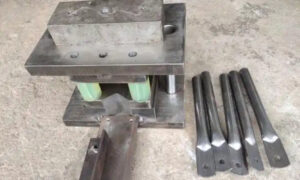
Every stamping die is designed to perform a specific metal forming operation with maximum accuracy and repeatability. Whether producing automotive components, electrical parts, household appliances, or industrial hardware, manufacturers rely on stamping dies to deliver consistent quality over thousands—or even millions—of production cycles.
A well-designed stamping die offers several important benefits, including higher production efficiency, longer tool life, better dimensional accuracy, lower maintenance costs, improved material utilization, and more stable product quality.
Stamping Die Spring Selection and Compression Calculation
Springs are essential components in almost every stamping die because they provide the force required for stripping, blank holding, ejecting, and forming.
Different stamping operations require different elastic elements. Standard coil springs are commonly used for punching and bending operations, while urethane springs and nitrogen gas springs are preferred for deep drawing and flattening applications because they provide more uniform pressure.
Common spring options include coil springs, flat wire springs, urethane springs, nitrogen gas springs.
Nitrogen gas springs have become increasingly popular in modern stamping die applications because they deliver stable force, long service life, and excellent forming consistency. Although their initial investment is higher than conventional springs, they greatly reduce wrinkling and cracking during deep drawing.
Urethane springs are a more economical alternative. They distribute pressure evenly but gradually lose elasticity after extended use and require periodic replacement.
Spring compression must be carefully calculated before die assembly. Excessive compression shortens spring life and may even cause spring failure, while insufficient compression can lead to poor stripping performance, part deformation, unstable feeding, excessive punch wear, or production interruptions.
Proper spring selection improves stamping die reliability and minimizes unexpected downtime during mass production.
Stamping Die Clearance Design
One of the most critical parameters in stamping die design is punch-to-die clearance.
Proper clearance affects nearly every aspect of stamping performance, including cutting quality, burr height, punching force, dimensional accuracy, die wear, and overall tool life.
Selecting the correct clearance depends primarily on material hardness and material thickness.
Generally speaking, softer materials require smaller clearance values, while harder or thicker materials require larger clearances to reduce punching force and prevent premature tool wear.
An optimized stamping die clearance helps achieve cleaner sheared edges, lower punching loads, reduced burr formation, longer punch life, and more consistent production quality.
During long-term production, normal wear gradually increases clearance. For this reason, new stamping dies are usually manufactured using the minimum recommended clearance so that acceptable cutting quality can be maintained throughout the die’s service life.
Stamping Die Development Process
Developing a stamping die involves multiple engineering and manufacturing stages that must be completed in sequence.
The process typically begins after the customer provides a product drawing. Engineers first evaluate whether the part can be manufactured efficiently using stamping technology.
If the project is feasible, the design team develops the manufacturing process, determines the operation sequence, and creates strip layouts for material utilization.
Once the process plan is finalized, detailed 2D and 3D die drawings are completed before manufacturing begins.
The typical stamping die development workflow includes product evaluation, process planning, strip layout design, die structure design, material procurement, rough machining, heat treatment, precision grinding, EDM machining, wire EDM cutting, CNC machining, component inspection, die assembly, die tryout, process adjustment, customer approval, and mass production.
Each stage directly influences the final quality of the stamping die.
Stamping Die Manufacturing and Assembly
After machining, every stamping die component is carefully inspected before assembly.
Technicians verify dimensions, remove burrs, polish working surfaces, inspect threaded holes, and confirm that all components meet design specifications.
Instead of waiting for every component to arrive, experienced die makers often begin assembling available parts while remaining components are still being manufactured. This approach shortens the overall production schedule.
Following assembly, the stamping die undergoes trial production. Engineers adjust clearances, forming conditions, spring pressure, guide alignment, and feeding accuracy until the die consistently produces qualified parts.
Only after successful testing and customer approval is the stamping die released for mass production.
Stamping Die Punch Design
The punch is one of the primary working components inside a stamping die.
Its function depends on the application and may include punching holes, blanking, trimming, bending, embossing, extruding, riveting, drawing, or forming.
Common punch applications include piercing, blanking, bending, embossing, extruding, riveting, forming.
Punch length is determined according to die structure and working stroke. The required dimensions generally depend on components such as the punch holder, backing plate, stripper plate, sheet thickness, and forming height.
Different forming operations require different punch configurations. Bending punches, embossing punches, drawing punches, and piercing punches all have unique design requirements to ensure accurate forming and sufficient tool strength.
Proper punch design improves product quality while reducing punch breakage and maintenance frequency.
Stamping Die Compound Die Design
A compound die performs multiple stamping operations during a single press stroke within one working station.
Unlike progressive dies that divide operations among multiple stations, a compound die completes several processes simultaneously, significantly improving positional accuracy.
Typical compound die operations include blanking, piercing, bending, drawing, trimming, embossing, flanging.
For example, a washer can be manufactured by completing piercing and blanking at the same time inside one compound die. This eliminates multiple handling steps and improves concentricity between the inner hole and outer profile.
Compound dies offer several important advantages, including higher dimensional accuracy, fewer production steps, improved repeatability, and increased production efficiency.
However, because multiple operations occur simultaneously, compound dies require more precise machining, more complex assembly, and higher manufacturing costs than simple single-operation dies.
Stamping Die Embossing Design
Embossing is another common stamping die application.
During embossing operations, the embossing punch must extend beyond the stripper plate while the die is fully closed. The projection height depends on the required emboss depth specified by the product design.
During die opening, however, the embossing punch should retract below the stripper plate to ensure smooth stripping and avoid damaging the finished part.
Proper blank holding pressure is equally important during embossing. The stripper plate must securely hold the sheet before the embossing punch forms the material. Otherwise, unstable material movement may result in inconsistent emboss height or part deformation.
Accurate punch positioning and pressure control are essential for producing uniform embossed features.
Stamping Die Maintenance for Long-Term Performance
Even the best-designed stamping die requires regular maintenance to maintain production quality.
Routine inspection helps detect wear before serious failures occur and extends overall die life.
A preventive maintenance program typically includes inspection of punches, die inserts, guide posts, springs, cutting edges, fasteners, stripper plates, lubrication systems, and alignment components.
Regular grinding of worn cutting edges prevents excessive burrs and reduces punching force, while proper lubrication minimizes friction and wear throughout the forming process.
By performing scheduled maintenance, manufacturers can reduce unexpected downtime, lower repair costs, improve product consistency, and maximize the return on tooling investment.
Conclusion
A high-quality stamping die is the result of careful engineering, precision machining, skilled assembly, and continuous optimization.
From selecting the correct springs and calculating compression, to optimizing die clearance, designing compound dies, manufacturing precision punches, and maintaining tooling throughout its service life, every step contributes to production efficiency and product quality.
As manufacturing continues to demand higher precision and greater productivity, investing in professional stamping die design, advanced machining technology, and systematic maintenance enables manufacturers to reduce production costs, extend tool life, and achieve stable, high-quality metal stamping results.

