
Deep drawing is one of the most important forming processes in sheet metal manufacturing, and the performance of a stamping die largely determines the quality of the finished product. A well-designed die controls material flow, forming pressure, and friction throughout the process, helping manufacturers achieve consistent dimensions, smooth surfaces, and stable production efficiency.
During deep drawing, sheet metal is stretched and formed into complex shapes. If any part of the process is not properly controlled, defects can quickly appear. Common problems include wrinkling, cracking, uneven wall thickness, surface scratches, distortion, and springback. Among these defects, wrinkling and cracking are the most critical because they often result in rejected parts and increased manufacturing costs.
For this reason, improving the design, adjustment, and maintenance of a stamping die is essential for achieving reliable deep drawing performance.
Stamping Die Solutions for Wrinkling
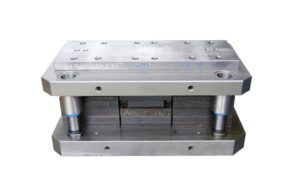
Wrinkling occurs when compressive stress around the flange exceeds the material’s stability during forming. Instead of flowing smoothly into the die cavity, the sheet metal buckles and creates waves or folds along the edge of the workpiece. These wrinkles not only reduce appearance quality but also interfere with material flow, making later forming operations more difficult.
Several factors may contribute to wrinkling, including insufficient blank holder force, excessive drawing depth, improper die radius, inconsistent material thickness, poor material properties, or uneven metal flow. In many cases, multiple factors work together rather than a single cause.
Modern stamping die designs often use nitrogen gas springs or urethane springs to provide more stable blank holder pressure. Nitrogen springs deliver balanced force throughout the forming stroke, making them ideal for automotive and high-volume production, while urethane springs provide a lower-cost solution for less demanding applications. Although urethane components are economical, they gradually lose elasticity after extended use and should be replaced regularly to maintain forming consistency.
Another effective solution is adding draw beads around the blank holder area. Properly designed draw beads regulate material flow, reduce excessive movement, improve sheet distribution, and minimize the risk of wrinkles. During die tryout, engineers typically adjust the draw bead height and blank holder pressure together until the material flows evenly throughout the drawing process.
Stamping Die Methods to Prevent Cracking
Cracking is another common challenge during deep drawing. It usually develops when the tensile stress applied to the material exceeds its strength limit, especially near the punch radius where deformation is most severe.
The likelihood of cracking depends on several factors, such as material ductility, sheet thickness, drawing ratio, punch radius, die radius, lubrication conditions, and blank holder pressure. Even a small change in one of these parameters can significantly affect forming quality.
One of the most effective improvements is optimizing the punch and die radii. Smooth transitions allow the material to flow naturally and reduce localized stress concentration. Polishing the forming surfaces also lowers friction and improves surface finish, helping prevent both cracking and scratches.
Lubrication plays an equally important role in stamping die performance. High-quality drawing lubricants reduce friction, decrease heat generation, improve material flow, and minimize wall thinning during forming. However, lubrication should be applied carefully because excessive lubricant on the punch surface may reduce the friction needed to stabilize the material, resulting in slipping during the drawing process.
Successful crack prevention usually requires balancing die geometry, lubrication, and forming pressure rather than relying on a single adjustment.
Stamping Die Repair and Maintenance
Even a precision stamping die experiences gradual wear after long production runs. Regular maintenance not only extends die life but also helps maintain product quality, reduce downtime, and lower manufacturing costs.
Routine inspections should focus on punch wear, die clearance, guide components, springs, inserts, and forming surfaces. Small defects such as worn cutting edges, scratches, or damaged inserts should be corrected before they develop into larger production problems.
Professional die repair generally involves equipment such as grinding machines, milling machines, CNC machining centers, wire EDM machines, and TIG welding equipment. These machines are commonly used for sharpening cutting edges, restoring worn surfaces, repairing damaged areas, modifying die structures, and manufacturing replacement components with high precision.
In addition to machining skills, experienced technicians must understand die structure, material flow, forming principles, and production requirements. Accurate diagnosis allows repairs to address the root cause of defects instead of repeatedly fixing the same problem.
A preventive maintenance program is often far more cost-effective than waiting until a die fails during production.
Progressive Stamping Die Material Control
Material positioning is especially important in progressive stamping operations because the strip passes through multiple stations before the finished part is separated.
The stripper plate performs two essential functions throughout this process. It removes the strip from the punch after each stroke while simultaneously holding the material firmly against the lower die during punching and forming. Stable material control improves dimensional accuracy and helps maintain consistent production quality.
Many progressive stamping dies also incorporate shallow pressure grooves in the stripper plate. These grooves apply slight pressure to the strip, helping maintain uniform clearance between the strip and the tooling while reducing unwanted material movement. As a result, punch wear is reduced, cutting quality improves, and overall die life is extended.
For high-speed production of electronic components, automotive connectors, terminals, and precision metal parts, proper strip control is one of the key factors that determines long-term production stability.
Main Components of a Stamping Die
A complete stamping die is made up of numerous precision components that work together throughout every production cycle. Its structure typically includes the upper die plate, lower die plate, backing plate, punch plate, stripper plate, die block, punches, inserts, guide posts, guide bushes, springs, locating pins, ejector pins, limit posts, and positioning blocks.
Each component performs a specific task during the stamping process. Guide systems maintain accurate alignment between the upper and lower dies, punches perform cutting or forming operations, stripper plates control material movement, and springs provide the force required for smooth operation. When these components are manufactured and assembled with high precision, the die can achieve stable performance, longer service life, and consistent product quality.
Proper inspection and replacement of worn components also help prevent unexpected failures and maintain overall production efficiency.
Conclusion
A high-performance stamping die is the result of careful design, precision manufacturing, accurate adjustment, and continuous maintenance. Every aspect of the tooling system, including material flow control, die clearance, blank holder pressure, lubrication, surface finish, and component condition, directly influences the quality of deep drawn parts.
By understanding the causes of wrinkling, cracking, and other common forming defects, manufacturers can optimize die performance, improve production efficiency, reduce scrap rates, and extend tooling life. Combined with regular maintenance and timely repairs, a properly managed stamping die provides reliable, cost-effective, and high-quality production for a wide range of metal stamping applications.

