
In metal stamping production, product quality depends not only on advanced stamping equipment but also on the performance of the stamping die. A precision-designed and well-maintained stamping die helps manufacturers achieve stable production, accurate dimensions, and lower defect rates.
However, during long-term operation, problems such as burrs, cracks, wrinkles, scratches, deformation, and dimensional errors may occur due to improper stamping die design, incorrect clearance, material flow issues, poor lubrication, or insufficient maintenance.
This article explains common stamping die quality defects, their causes, and practical solutions to help manufacturers improve production efficiency and maintain consistent stamping quality.
Common Quality Problems Caused by Stamping Die
Screenshot
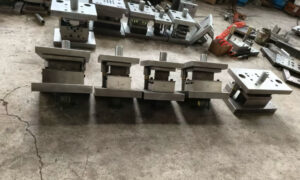
During metal stamping processes such as blanking, piercing, forming, and flanging, manufacturers may encounter defects including:
Burrs、deformation、scratches、material sticking、incorrect dimensions、cracks、wrinkles、uneven flanges、surface damage.
Most of these problems are closely related to the condition of the stamping die, tooling accuracy, material properties, and production parameters.
A properly designed stamping die can improve material flow, reduce wear, and maintain stable product quality during mass production.
Stamping Die Defects During Blanking and Piercing
Blanking and piercing are common stamping operations where die condition and clearance have a direct impact on product quality.
Excessive Burrs on Stamped Parts
Burrs are one of the most common defects in stamping production.
They are usually caused by:
Incorrect stamping die clearance、worn cutting edges、uneven punch and die alignment.
When the clearance is too large, the material is not cut cleanly, resulting in large burrs and poor edge quality. When the clearance is too small, cutting force increases and accelerates die wear.
Effective solutions include:
Optimizing punch-to-die clearance、sharpening worn cutting edges、checking die alignment regularly、replacing damaged components.
Regular inspection and maintenance of the stamping die can significantly reduce burr problems.
Material Sticking During Trimming
Material pickup occurs when metal sticks to the cutting edge of the stamping die during production.
Common causes include:
Insufficient clearance、poor lubrication、rough die surface、worn tooling.
To solve this problem, manufacturers can:
Adjust clearance properly、apply suitable lubricants、improve die surface finish、use wear-resistant surface coatings.
A smooth and properly maintained stamping die reduces friction and improves production stability.
Missing or Incomplete Holes
Incomplete holes may affect product assembly and dimensional accuracy.
Typical causes include:
Broken punches、incorrect punch length、blocked punch guides、improper punch installation.
Solutions include:
Replacing damaged punches、checking punch alignment、cleaning guide components、performing preventive maintenance.
Proper stamping die maintenance helps prevent unexpected production interruptions.
Stamping Die Solutions for Deep Drawing Defects
Deep drawing is a demanding stamping process that requires excellent material control and accurate die design.
One common defect is cracking during the forming of complex parts such as xxx、xxx、xxx.
Cracks usually occur because of uneven material flow or excessive forming stress.
Common causes include:
Improper blank holder force、uneven pressure distribution、poor draw bead design、insufficient material control、incorrect die geometry.
To solve deep drawing cracks, manufacturers can:
Adjust blank holder pressure、optimize draw bead position、improve die structure、modify forming surfaces.
A well-designed stamping die helps control material movement and prevents excessive stress concentration.
Preventing Wrinkles in Stamping Processes
Wrinkles usually occur when sheet metal flows too freely into the die cavity.
During forming, unstable material movement can cause excess material accumulation and create permanent wrinkles on the finished part.
Main causes include:
Low blank holder force、poor lubrication control、incorrect material flow、rough die surfaces.
Effective solutions include:
Increasing blank holder pressure、optimizing draw bead design、controlling lubrication、improving stamping die surface quality.
A properly designed stamping die ensures smoother material flow and better forming results.
Common Stamping Die Problems During Flanging
Flanging operations require precise control of material deformation. Incorrect tooling or process settings may cause:
Uneven flange height、flange cracks、surface scratches、incorrect flange angle、material stretching.
These defects are usually related to:
Incorrect die radius、uneven pressure、poor lubrication、worn tooling.
Manufacturers can improve flanging quality by:
Optimizing die design、maintaining proper lubrication、checking tool wear、adjusting forming parameters.
Regular stamping die maintenance is essential for stable flanging performance.
How to Improve Stamping Die Production Quality
Maintaining high stamping quality requires continuous control of tooling condition and production parameters.
Important practices include:
Regular stamping die inspection、checking clearance conditions、keeping cutting edges sharp、maintaining lubrication、monitoring punch wear、cleaning dies regularly.
Manufacturers should also replace worn components promptly and ensure operators understand correct die installation and adjustment methods.
Preventive maintenance reduces production downtime and extends stamping die service life.
Choosing Reliable Stamping Die Solutions
High-quality tooling plays an important role in achieving consistent stamping performance.
Professional stamping die manufacturers focus on:
Premium tool materials、precision machining、advanced heat treatment、surface coating technology、strict quality inspection.
IVILA provides precision stamping die solutions for industries including xxx、xxx、xxx.
With advanced manufacturing technology and engineering experience, IVILA helps customers improve stamping accuracy, reduce production defects, and achieve more efficient manufacturing.
Conclusion
Most stamping quality problems are closely related to stamping die condition, tooling design, clearance selection, lubrication, and maintenance.
By improving stamping die design, optimizing production processes, and performing regular maintenance, manufacturers can reduce defects such as burrs, cracks, wrinkles, and dimensional errors.
A high-performance stamping die not only improves product quality but also reduces production costs and increases manufacturing efficiency.
Choosing reliable stamping tooling is an important step toward achieving stable and precision metal stamping production.

