
Selecting the right materials, machining methods, and manufacturing processes is essential for achieving reliable and long-lasting press brake tooling performance. Many tooling failures are not caused by the bending machine itself but by poor material selection, improper heat treatment, incorrect machining strategies, or inadequate stress control during manufacturing.
As a professional manufacturer of press brake tooling, punches, dies, and stamping tools, IVILA understands the critical factors that determine tooling quality. In this guide, we explore ten important considerations that directly influence tooling life, machining efficiency, and bending accuracy.
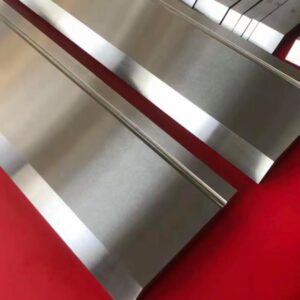
H2: Choosing the Right Tool Steel
One of the most important decisions in tooling manufacturing is selecting the appropriate steel grade.
Different applications require different materials:
- Hot-work tool steels for forging, extrusion, and high-temperature forming.
- Cold-work tool steels for punching, blanking, cold bending, and stamping.
- Stainless steels for corrosive environments.
- Pre-hardened steels for large tooling components.
- Fully hardened steels for precision tooling requiring maximum wear resistance.
At IVILA, material selection is based on the customer’s production requirements, workload, and expected tool lifespan.
H2: Tool Life Determines Material Requirements
Tooling lifespan has a direct impact on steel selection.
Short Production Runs
For production volumes below 100,000 cycles, softer steels may provide sufficient performance while reducing manufacturing costs.
Medium Production Runs
For 100,000 to 1,000,000 cycles, pre-hardened steels with hardness levels between 30–45 HRC are commonly used.
High Production Runs
For tooling expected to exceed 1,000,000 cycles, hardened tool steels with hardness levels of 48–65 HRC offer superior wear resistance and longer service life.
IVILA designs press brake tooling according to customer production volume to maximize return on investment.
H2: Material Hardness and Machinability
Harder materials generally offer better wear resistance but become more difficult to machine.
Typical machining guidelines include:
- High-speed steel tools for materials up to 330–400 HB.
- TiN-coated tools for materials up to 45 HRC.
- Carbide, ceramic, or CBN tools for materials above 65 HRC.
Balancing hardness and machinability is essential for producing high-quality tooling efficiently.
H2: Why Steel Structure Matters
The internal structure of steel significantly affects machining performance.
Common steel production methods include:
- Forging
- Rolling
- Casting
- Extrusion
Forged tool steel generally provides superior toughness and more consistent performance than cast materials.
At IVILA, premium forged alloy steels are widely used for manufacturing precision punches and dies to ensure durability and dimensional stability.
H2: Controlling Residual Stress
Residual stress is a hidden factor that can lead to:
- Tool deformation
- Dimensional inaccuracies
- Reduced tool life
- Cracking during machining
For this reason, IVILA performs stress-relief treatment after rough machining operations. This process minimizes internal stress and improves the stability of finished tooling.
H2: Proper Welding Practices for Tooling Components
Many large tooling assemblies require welding during production.
To ensure structural integrity, IVILA follows strict welding procedures:
Preheating Before Welding
Before welding, tooling components are preheated to reduce thermal shock and minimize crack formation.
Stress Relief Annealing After Welding
After welding, stress-relief annealing is performed to eliminate residual stress and improve overall mechanical stability.
This process is especially important for large press brake dies and customized tooling assemblies.
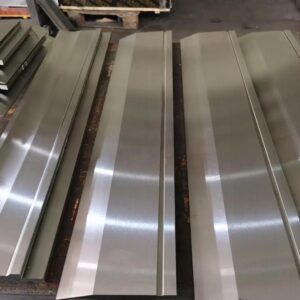
H2: Machining Strategy for High Precision Tooling
Successful tooling production requires multiple machining stages:
Rough Machining
Removes large amounts of material quickly.
Semi-Finishing
Creates uniform stock allowance for final machining.
Finishing
Achieves precise dimensions and surface quality.
Ultra-Finishing
Used for high-precision tooling applications.
IVILA utilizes advanced CNC machining centers, precision grinding equipment, and wire EDM technology to maintain tight manufacturing tolerances.
H2: Importance of Uniform Material Removal
Uniform material removal is one of the most overlooked aspects of tooling manufacturing.
Benefits include:
- Reduced tool vibration
- Consistent cutting forces
- Longer cutter life
- Better dimensional accuracy
- Improved surface finish
A stable machining process directly contributes to higher-quality press brake tooling.
H2: Tool Geometry and Manufacturing Accuracy
Even the best material cannot compensate for poor tool geometry.
Critical factors include:
- Punch angle accuracy
- Die opening precision
- Straightness
- Parallelism
- Surface finish
At IVILA, every punch and die undergoes strict inspection to ensure bending accuracy and repeatable production results.
H2: Heat Treatment Quality
Heat treatment plays a decisive role in tooling performance.
Proper heat treatment provides:
- Higher hardness
- Better wear resistance
- Improved toughness
- Greater dimensional stability
Improper heat treatment can lead to cracking, distortion, or premature tool failure.
IVILA applies controlled heat-treatment processes to ensure consistent hardness and reliable performance across all tooling products.
H2: Quality Control Is the Final Key
Even premium materials and advanced machinery cannot guarantee quality without proper inspection.
IVILA’s quality control procedures include:
- Hardness testing
- Dimensional inspection
- Surface quality verification
- Straightness measurement
- Trial assembly checks
These inspections ensure every press brake tooling product meets international quality standards before shipment.
Conclusion
Manufacturing high-performance press brake tooling requires much more than selecting a steel grade. Material choice, hardness, machining strategy, welding procedures, stress control, heat treatment, and quality inspection all play critical roles in determining tool life and bending accuracy.
With extensive manufacturing experience, advanced CNC equipment, professional heat-treatment technology, and strict quality management, IVILA delivers reliable tooling solutions for metal fabrication companies worldwide. By focusing on every detail of the production process, IVILA helps customers achieve greater precision, longer tooling life, and higher production efficiency.

