
Proper press brake tooling installation and maintenance are essential for consistent bending quality. Correct alignment, regular cleaning, and timely inspections can help reduce surface marks, prevent premature wear, and keep production running smoothly.
Press Brake Tooling Installation
Before installation, turn off the machine, release hydraulic pressure, and wear appropriate protective equipment. Check that the upper and lower tooling match the material thickness, material type, and bending requirements. Inspect the tooling for cracks, deformation, or corrosion.
Clean the worktable, clamping surfaces, and tooling contact areas to remove oil, metal chips, and other debris. Position the upper punch and lower die correctly, then secure them gradually and evenly. Check the alignment between the punch and die to ensure smooth, consistent bending.
After installation, perform a low-speed test and make a test bend using a suitable sheet. Check the bending angle, flange dimensions, and surface quality before starting production.
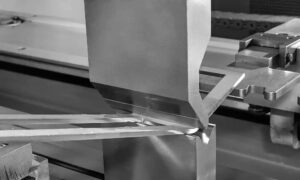
Daily Press Brake Tooling Maintenance
Daily maintenance helps keep press brake tooling in good condition and reduces the risk of unexpected production problems.
- Clean after each shift: Remove metal chips and debris from the tooling grooves and contact surfaces.
- Lubricate regularly: Follow the machine manufacturer’s lubrication schedule and use suitable lubricants for moving components.
- Inspect for wear: Check the punch tip, die shoulders, V-opening, and clamping parts for scratches, dents, or deformation.
- Keep maintenance records: Record tooling usage, inspections, repairs, and replacements to help plan future maintenance.
For surface-sensitive materials such as stainless steel and aluminum, clean tooling is especially important. Small metal particles trapped between the sheet and die can cause scratches or visible bending marks.
Deep Maintenance and Inspection
Regularly inspect moving components, springs, and guide parts for wear or reduced performance. Maintain the hydraulic system according to the machine manufacturer’s recommended service schedule.
For high-precision applications, check machine alignment and parallelism periodically. If the tooling radius or V-opening has worn beyond the required tolerance, repair or replace the tooling as necessary.
It is also important to check whether the tooling remains suitable for the material and bending force being used. Using the wrong tooling can increase wear and affect bending accuracy.
Common Problems and Solutions
Inconsistent bending angles: Check tooling alignment, machine pressure, material thickness, and bending parameters.
Surface marks or scratches: Clean the tooling, inspect the die shoulders, and consider a larger shoulder radius or specialized mark-free tooling.
Uneven tooling closure: Check the clamping system, tooling seating, and guide components.
Excessive tooling wear: Review the bending force, material requirements, lubrication, and tooling condition.
If a problem appears suddenly, stop production and inspect the tooling before continuing. This can help prevent further damage and reduce the number of defective parts.
Press Brake Tooling Safety Tips
Never exceed the machine’s rated bending capacity. Use the correct tooling for the material and thickness, and stop production if the machine or tooling shows unusual noise, movement, or excessive heat.
Store tooling in a clean, dry environment and use suitable racks or cabinets to prevent damage. Regular operator training can also help ensure safe and consistent installation and maintenance.
Final Thoughts
Proper press brake tooling installation and maintenance can improve bending consistency, reduce downtime, and extend tooling life. By following a standardized routine of cleaning, inspection, alignment, and safe operation, manufacturers can achieve better results and more reliable production.
For more information about press brake tooling, visit IVILA .

