
Stamping Die Guide: Types, Processes, and Essential Manufacturing Knowledge
Stamping dies are the foundation of modern sheet metal manufacturing. From simple brackets to complex automotive components, a well-designed stamping die ensures high precision, stable production, and lower manufacturing costs.
Different stamping operations require different die designs. Understanding the basic types of stamping dies, common forming processes, and essential manufacturing terms helps engineers, manufacturers, and buyers select the right tooling for their production needs.
What Is a Stamping Die?
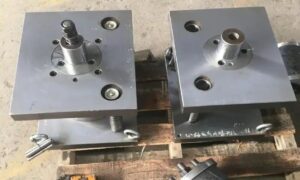
A stamping die is a precision tool used with a stamping press to cut, bend, stretch, or form sheet metal into finished parts. By applying controlled pressure, the die shapes flat metal into products with consistent dimensions and excellent repeatability.
Stamping dies are widely used in automotive manufacturing, electrical equipment, home appliances, construction machinery, aerospace components, electronics, medical equipment, and industrial products.
Main Types of Stamping Dies
Different manufacturing tasks require different die structures. Each type of stamping die is designed to perform a specific forming operation.
Blanking and Punching Die
Blanking and punching dies separate material along a designed contour. They are commonly used for blanking, punching, trimming, cut-off, notching, and slitting operations.
These dies are widely used for producing flat components with precise holes and outer profiles while maintaining high production efficiency.
Bending Die
A bending die changes the angle of sheet metal without removing material. It is commonly used to manufacture brackets, cabinets, electrical enclosures, structural frames, and machine components.
The bending angle, radius, and dimensional accuracy all depend on proper die design and material selection.
Deep Drawing Die
A deep drawing die converts a flat sheet into a hollow part by allowing the material to flow gradually into the die cavity.
Typical applications include fuel tanks, kitchen sinks, cookware, metal containers, battery housings, and automotive components. Proper lubrication and blank holder pressure are essential for preventing wrinkles and cracks during the drawing process.
Forming Die
A forming die reshapes sheet metal without separating the material. Common forming operations include flanging, embossing, necking, expanding, sizing, and restriking.
Because the material remains continuous, forming dies are often used to improve part strength, appearance, or functional performance.
Riveting Die
A riveting die permanently joins two or more components through pressure rather than welding. It is commonly used in automotive assemblies, electrical products, household appliances, and metal furniture where reliable mechanical connections are required.
Common Stamping Die Processes
A complete manufacturing process often combines several stamping operations to produce a finished part.
Blanking
Blanking cuts a finished profile from sheet metal. The removed piece becomes the final product, while the remaining material becomes scrap.
Proper die clearance helps reduce burrs and extends tool life.
Punching
Punching removes material to create holes of various shapes and sizes. Hole quality depends on punch sharpness, die clearance, lubrication, and material properties.
Bending
Bending forms the workpiece into the required angle or profile by applying controlled pressure. This process is commonly used for structural components, brackets, frames, and enclosures.
Deep Drawing
Deep drawing transforms flat sheet metal into seamless hollow parts. During this process, material flows into the die cavity while maintaining structural integrity.
Proper control of blank holder force, lubrication, and punch radius helps prevent wrinkling, tearing, and excessive thinning.
Flanging
Flanging bends the edge of a workpiece or an existing hole upward to create a flange. This process increases rigidity, improves assembly strength, and provides surfaces for fastening or welding.
Embossing
Embossing creates raised or recessed features on the surface of sheet metal without significantly changing its thickness. It is often used for logos, identification marks, decorative patterns, and reinforcement ribs.
Trimming
Trimming removes excess material after forming or deep drawing, producing the final contour and improving dimensional accuracy.
Coining
Coining applies very high pressure to produce sharp details, accurate dimensions, and smooth surface finishes. It is commonly used for precision metal parts requiring tight tolerances.
Common Stamping Die Terminology
Understanding common stamping terminology makes it easier to communicate with tooling suppliers, engineers, and production teams.
Curling
Curling rolls the edge of sheet metal into a rounded shape to eliminate sharp edges while improving strength and appearance.
Stretch Bending
Stretch bending combines tensile force and bending force to create complex curved components while maintaining dimensional stability.
Bulging
Bulging expands hollow or tubular components outward by applying pressure, allowing manufacturers to create lightweight yet strong structures.
Ironing
Ironing intentionally reduces the wall thickness of a drawn component while increasing its height. This process is widely used in beverage can manufacturing and other thin-wall metal products.
Hydroforming
Hydroforming uses high-pressure fluid instead of a rigid punch to shape sheet metal. It is suitable for producing lightweight components with complex geometries and excellent surface quality.
Hole Flanging
Hole flanging enlarges the edge around a punched hole to create a vertical flange for fastening, threading, or reinforcement.
Why Stamping Die Selection Matters
Selecting the right stamping die directly affects manufacturing efficiency, product quality, and production costs.
A properly designed stamping die improves dimensional accuracy, reduces burr formation, minimizes material waste, extends tool life, shortens production cycles, and lowers maintenance costs. Good die design also helps maintain consistent product quality throughout high-volume production.
For manufacturers, investing in high-quality stamping dies means better productivity, fewer machine stoppages, and more reliable finished parts.
Conclusion
A stamping die is much more than a production tool—it is the foundation of efficient and precise sheet metal manufacturing. Whether the application involves blanking, punching, bending, deep drawing, flanging, or forming, selecting the appropriate die design is essential for achieving consistent quality and long service life.
By understanding different stamping die types, manufacturing processes, and common industry terminology, manufacturers can improve production efficiency, optimize tooling performance, and produce high-quality metal components with greater confidence.

